Lawn Treatments That Deliver the Best Results in Minnesota’s Clay-Heavy or Sandy Soils
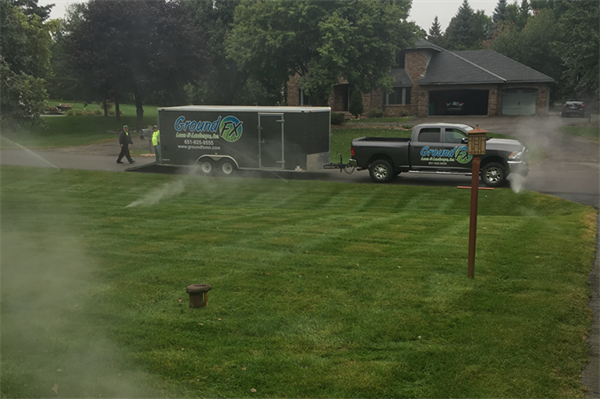
For homeowners in the Twin Cities metro area, understanding the unique characteristics of clay-heavy and sandy soils is essential for achieving a healthy, resilient lawn.
Ground FX Lawn & Landscape provides full-service residential lawn care that addresses these soil-specific challenges with precision. From core aeration and soil amendments to tailored fertilization and irrigation plans, our team ensures each lawn receives the attention it needs to thrive through Minnesota’s variable climate.
By integrating agronomic expertise with consistent maintenance practices, we help homeowners achieve lush, uniform turf while protecting the long-term health of their soil. Here's how we help your lawn.
Understanding Minnesota’s Soil Types
Minnesota’s soil profiles vary widely due to glacial patterns that left behind both dense clay deposits and loose sandy formations. Clay soils are composed of fine particles that compact tightly, which limits pore space and slows drainage.
Water often remains near the surface, restricting oxygen availability at the root level and reducing early-season soil warming. These soils store nutrients well but become compacted easily under regular traffic.
Sandy soils behave differently. Their large particles allow rapid water movement through the profile, which carries nutrients downward before turf roots can fully capture them.
Although sandy soils warm more quickly in spring and support deeper rooting, they require constant attention to moisture management because they lose water quickly during dry periods.
These structural differences directly influence how lawns respond to treatments. Clay soils often need practices that increase aeration and improve internal drainage, while sandy soils benefit from organic matter that increases water retention.
Identifying the soil type is necessary for selecting treatments that produce stable results throughout Minnesota’s shifting weather patterns.
Fertilization Strategies for Clay vs. Sandy Soils
Fertilization in Minnesota must account for how effectively each soil type holds nutrients. Clay soils retain nutrients well, so they respond to moderate fertilization rates applied during active growth periods.
Early summer and early fall feedings generally align with peak uptake. Adding organic matter to clay soils strengthens soil biology and helps reduce surface crusting.
Sandy soils require a different approach. Rapid leaching makes light, more frequent applications the most efficient method. Slow-release nitrogen blends work well because they supply nutrients consistently rather than delivering a quick surge that may dissipate before the grass can use it.
Potassium is especially important in sandy soils because it improves drought resilience and stress recovery.
Minnesota’s typical growing season begins when soil temperatures rise in late April and sees its strongest activity through mid-summer. Fertilization plans should align with this cycle by providing controlled spring feeding, steady mid-season nutrition, and a fall application that supports root strength before winter.
Soil testing is valuable for determining exact nutrient levels, especially in neighborhoods with highly variable soil textures.
Aeration & Soil Amendment Techniques
Aeration is one of the most effective methods for improving turf performance in clay-heavy soils. Core aeration removes small soil plugs, creating channels that allow air, water, and nutrients to penetrate compacted layers.
This reduces surface rigidity and supports deeper root expansion. Topdressing with compost after aeration enhances these benefits by integrating organic matter that gradually improves soil structure.
Sandy soils do not compact as aggressively, but they often need amendments that increase water-holding capacity. Compost is a reliable option, as it binds moisture and nutrients within the soil profile.
Biochar is another material increasingly used in sandy environments because it offers long-term structure, supports microbial activity, and holds water exceptionally well. Gypsum can be useful in clay soils where tight particle bonding limits internal drainage.
Aeration schedules are determined by soil behavior and lawn use. Clay-heavy lawns often require annual aeration, while sandy lawns may only need it every few years.
Spring and early fall are the most productive windows because turf recovery is rapid during these periods. Introducing amendments after aeration allows them to settle deeper into the profile, where they have the most impact.
Watering Practices Adapted to Soil Type
Watering practices should follow the moisture-handling characteristics of each soil type. In clay soils, water absorption is slow, so irrigation should be delivered with cycle-and-soak methods that prevent runoff.
Deep, spaced-out watering encourages strong rooting and reduces the risk of standing water near the surface. Rainfall often lingers in clay-based lawns, so irrigation must be adjusted to prevent oversaturation.
Sandy soils lose water quickly and benefit from shorter, more frequent watering sessions that maintain steady moisture in the root zone.
Early morning irrigation creates conditions that maximize absorption and minimize evaporation during warm summer periods. Monitoring soil moisture is especially important for sandy lawns during extended dry spells.
Minnesota’s rainfall patterns often shift between heavy storms and prolonged dry periods. Adjusting irrigation based on soil response rather than fixed schedules produces better performance.
This approach is especially important for newly seeded or recently renovated lawns, where consistent moisture is necessary for uniform germination.
Choosing Lawn Treatments & Grass Varieties That Thrive
Effective lawn treatments in Minnesota depend on a combination of nutrient management, soil improvement, and turf selection. Clay soils respond well to treatments that relieve compaction, increase oxygen movement, and introduce organic material.
Overseeding mixes for clay regions often include Kentucky bluegrass, which spreads through rhizomes and maintains density even under regular use. Fine fescue is a strong option for shaded areas where clay dominates.
Sandy soils benefit from practices that improve moisture retention and reduce nutrient loss. Compost integration, biochar, and slow-release fertilization support more consistent turf performance.
Perennial ryegrass establishes quickly in sandy environments, while drought-tolerant bluegrass cultivars take advantage of deeper rooting conditions.
Weed behavior varies between soil types. Clay soils tend to develop moisture-focused weeds, while sandy soils support species that thrive in drier conditions.
Pre-emergent and post-emergent programs should be chosen based on observed patterns throughout the season. pH adjustments may also be necessary depending on soil test results, especially in regions with naturally acidic or alkaline tendencies.
Partner with Ground FX Lawn & Landscape for Superior Lawn Care in the Twin Cities
Serving White Bear Lake and surrounding East Metro neighborhoods, Ground FX Lawn & Landscape combines local knowledge with hands-on responsiveness that national chains cannot match.
Call us at 651-925-9555, or contact us for customized service plans. Whether you need consultation for clay or sandy soils, ongoing seasonal treatments, or a comprehensive maintenance program, our team is ready to deliver professional, reliable results that keep your lawn looking its best year-round.