Key Benefits of Choosing a Full-Service Residential Lawn Maintenance Provider in the Twin Cities Metro Area
Full-service residential lawn maintenance in the Twin Cities metro area is fundamentally about consistency, agronomic precision, and risk management across all four seasons.
When a single provider oversees mowing, fertilization, weed control, irrigation checks, and seasonal cleanups, the turf system is managed as an integrated whole rather than a collection of disconnected tasks.
That integrated approach matters in a region where heavy clay soils, freeze–thaw cycles, and intense summer humidity all influence how turfgrass grows, recovers, and resists stress.
For homeowners who expect dense, uniform turf instead of patchy green, partnering with one qualified provider who understands these variables is often the most reliable way to keep a lawn performing at a high level year after year.
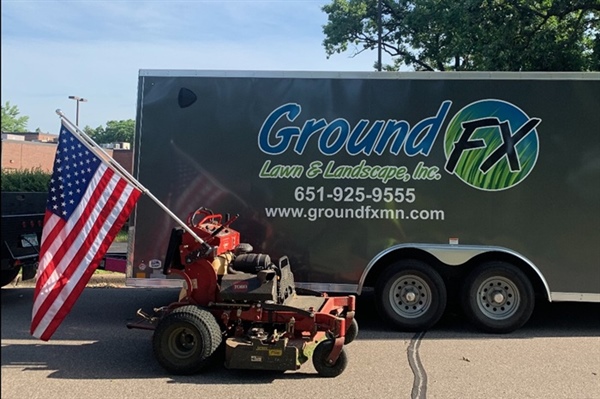
While Ground FX Lawn & Landscape is one example of a firm built around these principles, the focus here is on the science and best practices behind effective lawn care, so educated homeowners can evaluate service options with a technical lens.
Weekly Mowing & Manicuring Support Long-Term Turf Health
Regular mowing is not a cosmetic preference; it directly shapes turfgrass physiology. Cool-season grasses common in Minnesota, such as Kentucky bluegrass and perennial ryegrass, maintain the highest photosynthetic efficiency when leaf tissue is removed gradually.
Following the “one-third rule” — never removing more than one-third of the leaf blade at a time — preserves carbohydrate reserves in the crown and roots, which increases tolerance to heat, drought, and wear.
Stretching mowing intervals so the lawn is cut aggressively causes scalping, exposes stems, and forces the plant to expend stored energy on emergency regrowth. Over several seasons, that pattern leads to thinning, encroachment by opportunistic weeds, and greater susceptibility to insect and disease pressure.
Regular mowing on a weekly schedule also controls thatch and surface irregularities in a way that supports soil–air–water exchange. Dense, upright leaf growth encourages tighter tillering and fewer open soil patches where weed seeds can establish.
A crew trained in manicuring details — directional striping, trimming along paved edges, and careful work around irrigation heads and tree rings — minimizes mechanical injury and soil compaction in high-traffic zones.
In practical terms, that means the turf canopy can intercept light more evenly, roots can exploit a wider soil volume, and the lawn recovers faster from foot traffic or recreational use.
Cut quality is another variable that benefits from a weekly professional visit. Sharp blades create clean cuts instead of shredded leaf tips, which reduces desiccation and the entry points for foliar diseases.
Crews who monitor mowing patterns week by week can adjust deck height with changing weather, shift patterns to reduce wheel ruts, and coordinate mowing with fertilization and irrigation timing.
In an integrated program, the same provider that schedules mowing also understands when the lawn has been treated or watered, which reduces the risk of tracking herbicides, scalping soft growth, or compacting saturated soil.
For homeowners in the Twin Cities metro area assessing full-service lawn care, weekly mowing and detailed manicuring are foundational indicators of long-term turf health.
The Role of Spring & Fall Cleanup in Minnesota Lawn Performance
In Minnesota’s climate, comprehensive spring and fall cleanup is a key control point for disease pressure, winter damage, and overall turf vigor.
Spring cleanup removes matted leaf litter, sand, and salt residues from winter maintenance, and dead tissue that can harbor snow mold fungi. When these materials remain, they form a dense surface layer that intercepts light, traps moisture, and slows soil warming in April and May.
That delay suppresses green-up, encourages cool and wet microclimates at the soil surface, and can extend the active period for pathogens such as Typhula and Microdochium species.
By contrast, a thorough spring pass that includes raking, debris removal, and selective dethatching where needed gives emerging turf immediate access to light and air, shortening the recovery window after snow cover.
Fall cleanup plays a different but equally important role. As deciduous trees drop leaves across the East Metro, accumulated leaf layers over one-half inch deep begin to smother turf, reduce oxygen exchange, and trap moisture at the crown.
Research from turf programs in cold regions shows that extended leaf cover across late fall increases the risk of snow mold and crown hydration injury. Systematic fall cleanup — removal or mulching of leaves, cutting back perennials around turf edges, and final mowing at an appropriate height before freeze-up — reduces that risk.
It also prevents organic debris from collecting in low areas, where it can impede drainage and create chronic wet spots that break down turf over several years.
When spring and fall cleanup are handled by the same full-service provider that manages mowing and treatments, the work can be sequenced with fertilization, aeration, and irrigation shutdown or startup. That coordination avoids common conflicts, such as applying late-fall nitrogen and then leaving a dense leaf layer untouched, or activating irrigation before debris is cleared from valve boxes and heads.
In practice, homeowners who schedule bi-annual cleanup as part of a broader program often see denser spring green-up, fewer snow mold scars, and less variability between shaded and sunny sections of the yard. Those outcomes are exactly what service pages focused on spring and fall cleanup are designed to address in Minnesota neighborhoods.
Time & Cost Efficiency of Bundled Fertilizing, Weed Control, & Irrigation Services
Bundling fertilizing, weed control, and irrigation services under one provider changes the economics and logistics of lawn care for both the homeowner and the contractor.
From a cost perspective, route density and predictable visit frequency lower per-visit overhead for the service company, which can translate into more competitive package pricing compared with assembling separate vendors for each task.
On the homeowner side, a single annual service plan consolidates billing, reduces administrative time spent scheduling and rescheduling visits, and simplifies forecasting of maintenance costs across the year.
Beyond financials, bundled programs align agronomic decisions across fertilization, weed management, and water scheduling so that each component supports the others instead of working at cross purposes.
Coordination Across Treatments & Watering
Nutrient management, selective weed control, and irrigation timing are tightly linked in cool-season turf systems. For example, higher nitrogen availability drives top growth and can help turf outcompete broadleaf weeds, but only if irrigation keeps soil moisture in an optimal range and mowing frequency keeps up with growth.
A provider that both applies fertilizer and programs irrigation controllers can calibrate application rates and watering windows based on soil type, slope, sun exposure, and historical performance of the site.
The same technician or operations manager can build in pre-emergent herbicide windows before crabgrass germination, adjust post-emergent treatments based on observed weed pressure, and adapt irrigation runtimes to offset unusually wet or dry periods, all without the communication gaps that arise when multiple companies are involved.
From a risk management standpoint, bundled services give homeowners a clearer chain of responsibility for lawn performance. When one company handles fertilizing, weed control, and irrigation, diagnosing issues becomes more straightforward because the provider has records of product rates, application dates, nozzle inspections, and controller settings.
Key Communication & Responsiveness Standards in Professional Lawn Service
For a residential lawn service provider, agronomic expertise is only part of the value proposition; communication quality and crew responsiveness heavily influence long-term outcomes.
Homeowners who engage full-service programs are entrusting a significant portion of their property’s upkeep to an external team, and that relationship functions best when expectations are clearly documented and regularly reviewed.
Written service scopes that define mowing frequency, treatment windows, approximate visit durations, and seasonal start and stop dates create a technical baseline against which both the homeowner and provider can evaluate performance.
Service summaries after visits — either as door hangers, emailed reports, or portal updates — give a record of what was done, under what conditions, and what the homeowner should monitor between visits.
Responsiveness to weather and site conditions is especially important in the Twin Cities, where fast-changing storms and extreme temperature swings can make rigid schedules impractical.
A provider that monitors forecasts and communicates schedule adjustments in advance helps protect treated areas from wash-off, prevents mowing on saturated soil, and coordinates access to gated backyards or pet areas.
Communication protocols should also cover how homeowners can report concerns, such as turf disease, irrigation leaks, or chronic weeds, and how quickly the provider commits to inspecting and responding. Service-level expectations measured in days rather than weeks are aligned with best practices for managing active turf issues before they expand.
Crew behavior onsite is another dimension of responsiveness. Trained crews who walk the property before unloading equipment, identify hazards, and confirm gate access reduce the risk of damage and missed areas.
When the same crews service a property throughout the season, they build familiarity with microclimates, problem spots, and homeowner preferences, which improves both efficiency and quality.
Transparent communication about crew assignments, supervisor contact information, and escalation paths gives homeowners confidence that technical issues will be handled by personnel who understand the property. For full-service programs, operational reliability matters as much as the products applied.
Advantages of Locally Operated East Metro Lawn Providers Over National Chains
Locally operated lawn care companies in the East Metro bring a level of site-specific knowledge that national chains rarely match. Soil types, drainage patterns, and microclimates vary substantially between neighborhoods such as White Bear Lake, Mahtomedi, and North St. Paul, even though they share a broad regional climate.
Local providers who work within a defined geographic radius become familiar with recurring issues in those communities, such as heavy shade from mature tree canopies, poorly draining low spots associated with certain subdivisions, or particular insect pressures near wetlands.
That experience shapes more accurate recommendations for seeding blends, mowing heights, and treatment timing at the neighborhood level.
Routing and scheduling practices also differ between local operators and national brands. A company based in the East Metro can build dense routes that keep crews close to the same municipalities each day, which reduces travel time and allows for faster response when a customer reports an issue.
Shorter drive times support tighter service windows and make it practical to schedule return visits for touch-ups or follow-up inspections without long delays. By comparison, chains that route trucks across large metro regions may struggle to revisit properties quickly outside of preset schedule cycles, especially during peak growing or snow seasons.
Decision-making structure is another advantage to a local operation. When agronomists, account managers, and owners are located in the same region where the work occurs, they can adjust programs rapidly in response to unexpected conditions such as summer drought restrictions or outbreaks of particular pests.
They are also more likely to invest in long-term relationships with homeowners and neighborhood associations because their reputation is tied closely to visible results on nearby streets. For homeowners evaluating providers online, contact details such as a local office address and a direct phone number for a company like Ground FX Lawn & Landscape signal that decisions about their lawn will be made by people who understand East Metro conditions firsthand.
Coordinated Full-Service Lawn Maintenance Support for Twin Cities Homeowners
A full-service program delivered by a single provider brings structure to the entire maintenance cycle: weekly mowing and manicuring, coordinated spring and fall cleanup, integrated fertilization and weed control, and responsive adjustments guided by communication between homeowner and crew.
Ground FX Lawn & Landscape serves Twin Cities neighborhoods that experience the same freeze–thaw cycles, summer humidity, and localized soil challenges. By structuring visits around local growing degree days and regional disease risk periods, our team can keep turf density, color, and resilience within target ranges across the season.
Residents who are ready to start that conversation can contact us or call us to discuss program options tailored to their property.